
Dental Crowns – Morristown, NJ
A Resilient Repair for Damaged Teeth
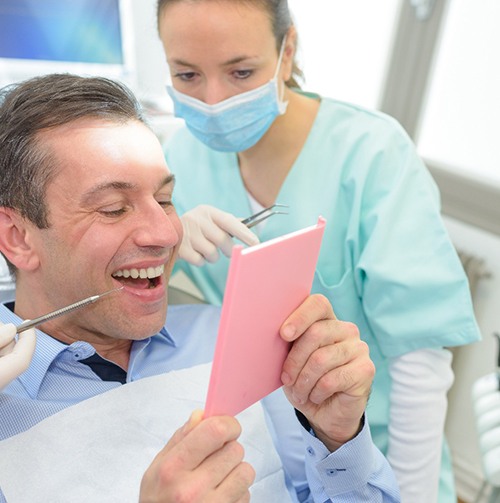
Cracked, broken, or decayed enamel is at risk of further damage or disease the longer it remains untreated, which can detract from your dental health. Our team can help prevent additional injuries, infection, or decay by placing a customized dental crown, a resilient repair for damaged teeth.
Continue reading to learn more about these restorations and when they might be recommended, and feel free to contact us for additional information.
Why Choose Skyline Dental of Morristown for Dental Crowns?
- CEREC One-Visit Crowns Available
- Providers With Decades of Combined Experience
- Flexible Financing Available
What Is a Dental Crown?

A dental crown is a tooth-shaped cap that’s carefully customized to resemble the natural shape and size of your teeth and is cemented over a damaged or treated tooth to help protect it from harm while allowing you to continue using it to eat, speak, and smile normally.
These restorations can be made from a variety of materials, such as gold, porcelain-fused-to-metal, EMAX, zirconia, and porcelain, based on your unique needs. They are a versatile treatment that can be used to:
- Prevent additional damage to cracked, decayed, or broken teeth.
- Protect a tooth that underwent a root canal.
- Cover a dental implant to rebuild your smile after tooth loss.
- Reshape a worn-down or stunted tooth.
- Anchor a dental bridge to close a wider gap in your grin.
The Dental Crown Process

Before proceeding, you must consult one of our providers to ensure you’re a good candidate for this service. Once we’ve examined your condition and determined it’s right for you, we can take accurate, mess-free digital impressions of your teeth and gums that can be sent to a dental laboratory for a traditional dental crown or shared with special CEREC software and carved with an on-site milling machine for a one-visit restoration in the same appointment.
If you’re receiving a one-visit crown, we’ll check the fit and cement it in place before sending you home. Otherwise, it might take the dental laboratory a couple of weeks to deliver the finished product, so our team may want to place a temporary prosthetic to preserve your tooth in the meantime. Then, once your crown arrives, we’ll contact you for a final fitting and make any necessary adjustments before placing it.
The Benefits of Getting a Dental Crown

There are several excellent reasons to consider getting a dental crown with our team in Morristown, including:
- Protect your teeth. Your restoration shields the underlying tooth to help prevent further damage, decay, or disease.
- Rebuild your smile. These covers can also be used as replacement teeth to restore your arches after teeth have gone missing, when combined with a dental implant or bridge.
- Long-lasting results. The caps are built to withstand the pressure of daily biting and chewing and can last anywhere from 5 to 15+ years with proper care.
- Easy maintenance. Simple precautions, like brushing and flossing twice daily and scheduling a dental exam and cleaning every 6 months, can help keep it in great shape for years to come.
- Versatile treatment. These can be made from tooth-colored materials to boost your confidence or from more durable metal options, depending on your unique circumstances.
Dental Crowns FAQs
Are dental crowns permanent?
Dental crowns cannot be called permanent since they will eventually have to be replaced. However, they are certainly a long-term solution since they can last between five and fifteen years or possibly more if they receive excellent care. Since the procedure used to place a crown usually involves removing a small amount of dental enamel that will not grow back, the tooth that receives it will probably need to wear crowns for life for protection from infection and injury. Crowns serve to protect compromised teeth from further damage so they can remain healthy and functional for much longer than they would without treatment, and you can keep your appliance in great shape by practicing habits like:
- Excellent oral hygiene.
- Taking care to clean along the seam between your crown and your tooth when brushing and flossing.
- Limiting your intake of sugars, acids, and alcohol.
- Visiting our office in Morristown regularly for checkups and cleanings.
- Wearing a protective appliance such as a nightguard when appropriate.
- Kicking bad oral habits like tobacco use, teeth grinding, using your teeth to open packaging, and chewing on ice or inedible substances like wood, metal, plastic, and fingernails.
How do you know when a dental crown needs to be replaced?
Only a trained dentist such as Dr. Henkin or Xholi can properly determine if your crown needs to be replaced. However, you may notice signs that say your appliance is near the end of its lifespan such as:
- Pain: If the tooth wearing a crown is painful, it may be due to an untreated oral infection that can make it necessary to remove or replace the device.
- Instability: Your crown should not move about on your tooth. If your crown is no longer securely attached and is wiggling around, it may need to be recemented or replaced.
- Degraded appearance: A dental crown should keep your smile lovely as well as healthy, so unsightly cracks, chips, or stains can be adequate reason to get a new one.
- A dark line around the base: An aging porcelain-fused-to-metal crown may show an unsightly dark line along the seam between it and the tooth due to the ceramic part being worked loose from the metal piece anchoring it.
Do dental crowns get cavities?
Dental crowns cannot develop cavities since they are not made from natural dental enamel that can be metabolized by harmful oral bacteria. However, the tooth wearing a crown can still develop a destructive infection, and this is especially likely if the patient does not practice proper oral hygiene. A crowned tooth is just as likely to develop new cavities as an uncrowned tooth, so be sure to protect your oral health by brushing and flossing every day while attending regular checkups at our office in Morristown.