
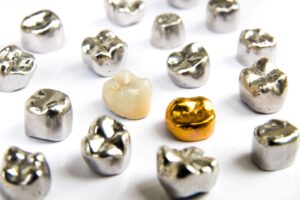
Should I really replace my older dental crown? After all, if it isn’t causing pain and still gets the job done, why should I change it? While a functioning crown may not always need immediate replacement, there are several reasons your dentist might recommend upgrading an older metal restoration. Here’s more on a few of them.
1. The Crown May Be Showing Its Age
Dental crowns don’t last forever. Although a well-maintained crown can 10 to 15 years of reliable service, normal chewing forces, wear, and changes in your oral health can eventually compromise the restoration.
Your dentist may notice signs of wear, cracks, a poor fit, or deterioration around the edges during a routine examination. Replacing a crown before it fails completely may prevent a more complicated dental problem later. Waiting until a crown breaks or the tooth underneath becomes painful isn’t always the best strategy.
2. Decay Can Develop Around an Old Crown
A crown covers and protects a tooth, but it doesn’t make the tooth underneath immune to decay. If bacteria and plaque accumulate around the crown’s edges, the underlying tooth can develop a cavity.
This can be especially concerning if the crown no longer fits tightly against the tooth. Your dentist can examine the margins of the restoration and use X-rays when necessary to look for decay that isn’t visible during a routine visual examination. Replacing a failing crown can help restore a proper seal and protect the remaining tooth structure.
3. Modern Crowns Can Look More Natural
Traditional metal crowns are durable, but their appearance can leave a lot to be desired for some people, especially when they’re placed on visible teeth. Modern ceramic and porcelain-based restorations can be designed to closely match the color and appearance of your natural teeth.
If you’re self-conscious about a dark or metallic-looking crown when you smile, replacing it with a tooth-colored restoration may provide a significant cosmetic improvement. Your dentist can help determine which material is appropriate based on the location of the tooth, your bite, and your individual needs.
4. A Better Fit Can Improve Comfort and Function
An older crown may become worn or damaged over time, potentially affecting the way your teeth come together when you bite. A poorly fitting crown can also contribute to food getting trapped around the restoration or irritation of the surrounding gums.
A new crown can be carefully designed to fit your current bite and dental anatomy, helping restore comfortable chewing and a healthy relationship between the restoration and surrounding tissues.
Replacing an older metal crown isn’t necessarily about replacing something because it’s old. It’s about evaluating whether the restoration is still protecting your tooth and supporting your oral health. Plus, you may enjoy an aesthetic upgrade! If your dentist has recommended replacing your metal crown, ask why and what alternatives are available.
About the Practice
Whether you want to replace your metal crown or need a new one, our caring team, led by Drs. Henkin and Xholi, can provide you with a customized restoration that not only completely covers and strengthens your damaged tooth, but can be made out of materials to match the appearance of real tooth enamel, giving you a seamless smile! Contact us online for an appointment or call our Morristown office at (862) 260-4116.